No Client PII
FABT pushes project-level bed inventory (HMIS Element 2.07) — beds total, beds occupied, population type, utilization rate. This is project descriptor data, not client-level PII. No client consent is required. DV shelter data is aggregated across all DV shelters before push — individual DV shelter occupancy is never sent.
Hold-attribution PII fields introduced in v0.55 (optional client name, date of birth, and notes on non-DV reentry holds) are never included in HMIS push payloads. Only project-level inventory data is exported.
Admin HMIS Export Tab
HUD requires bed inventory data in HMIS. Instead of manual data entry, the administrator opens the HMIS Export tab — the data is already there, aggregated automatically from coordinator updates. DV shelters appear as a single aggregated row. No individual DV shelter data ever leaves the system.
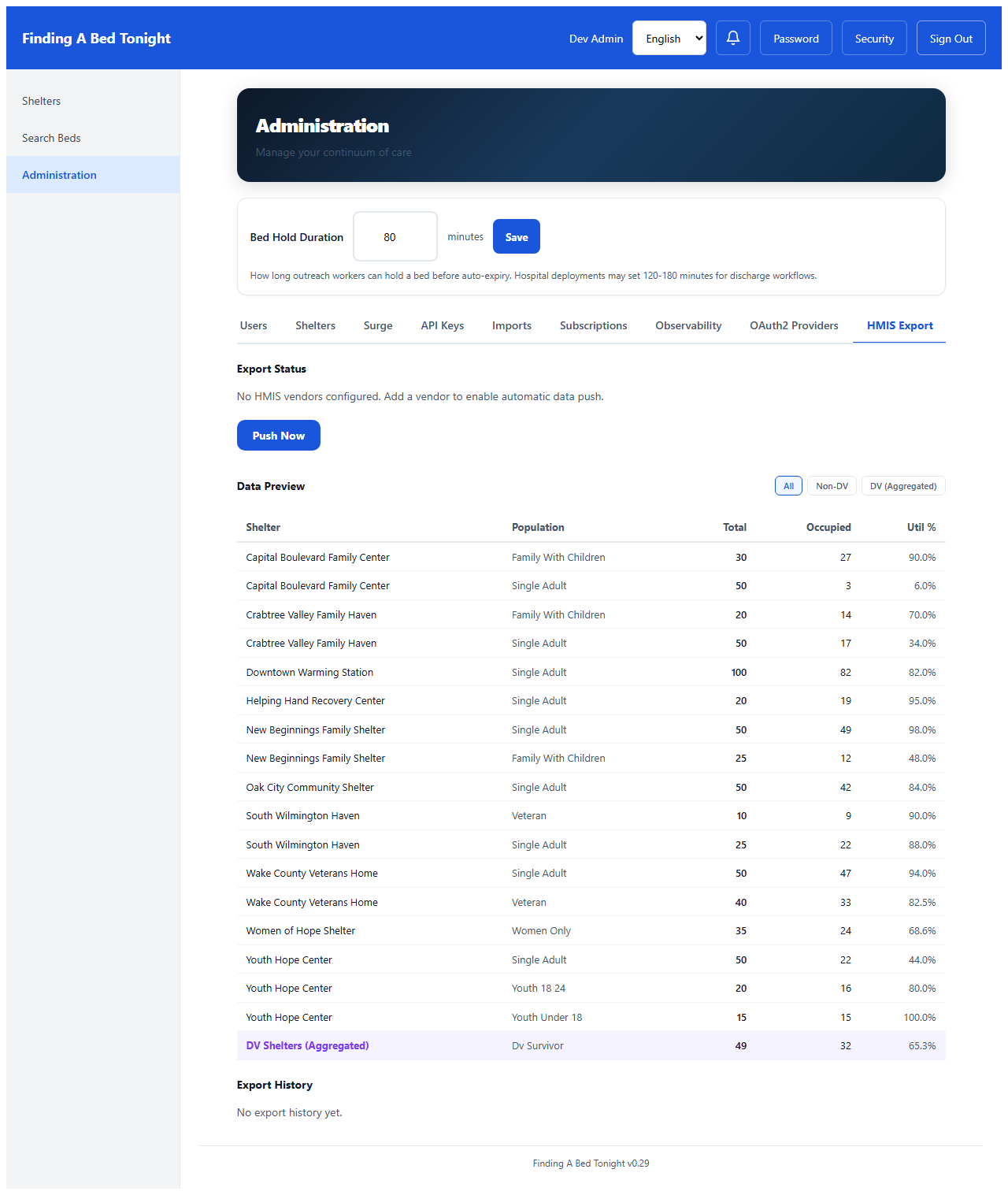
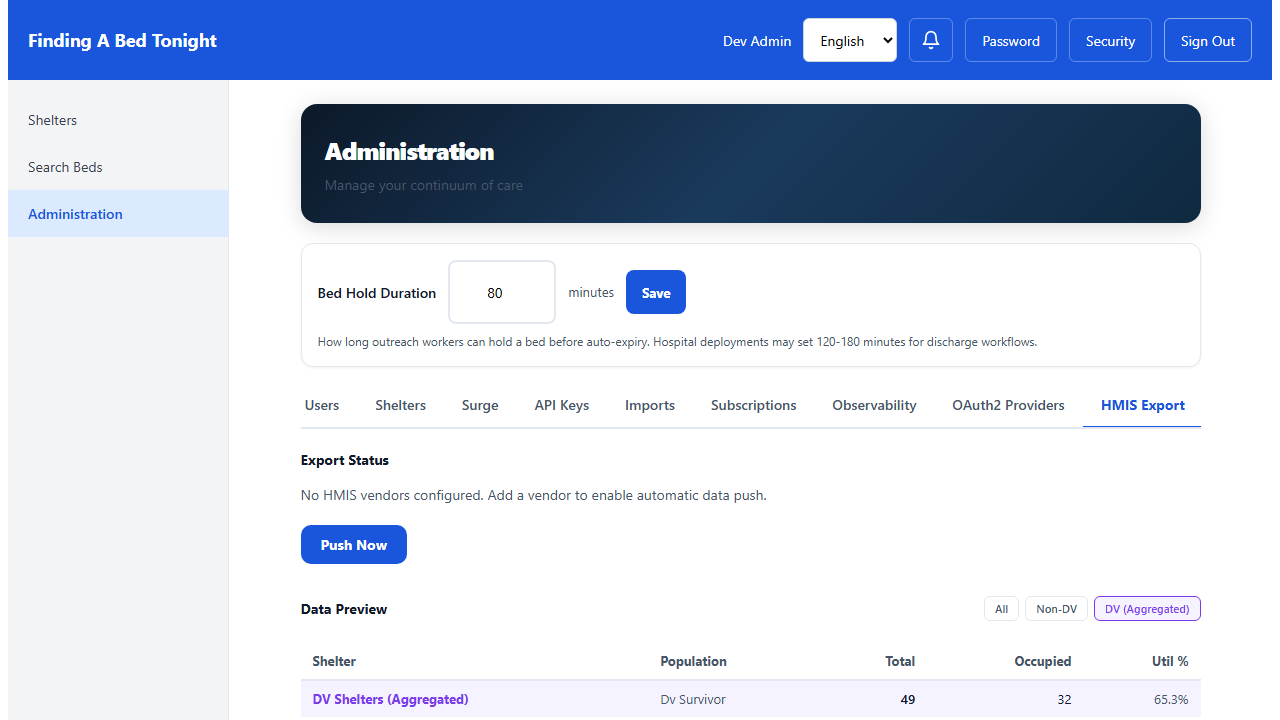
The administrator previews exactly what will be sent. She filters to DV only — and sees a single aggregated row across all DV shelters. No way to infer which shelter has which occupancy. The privacy math is built in.
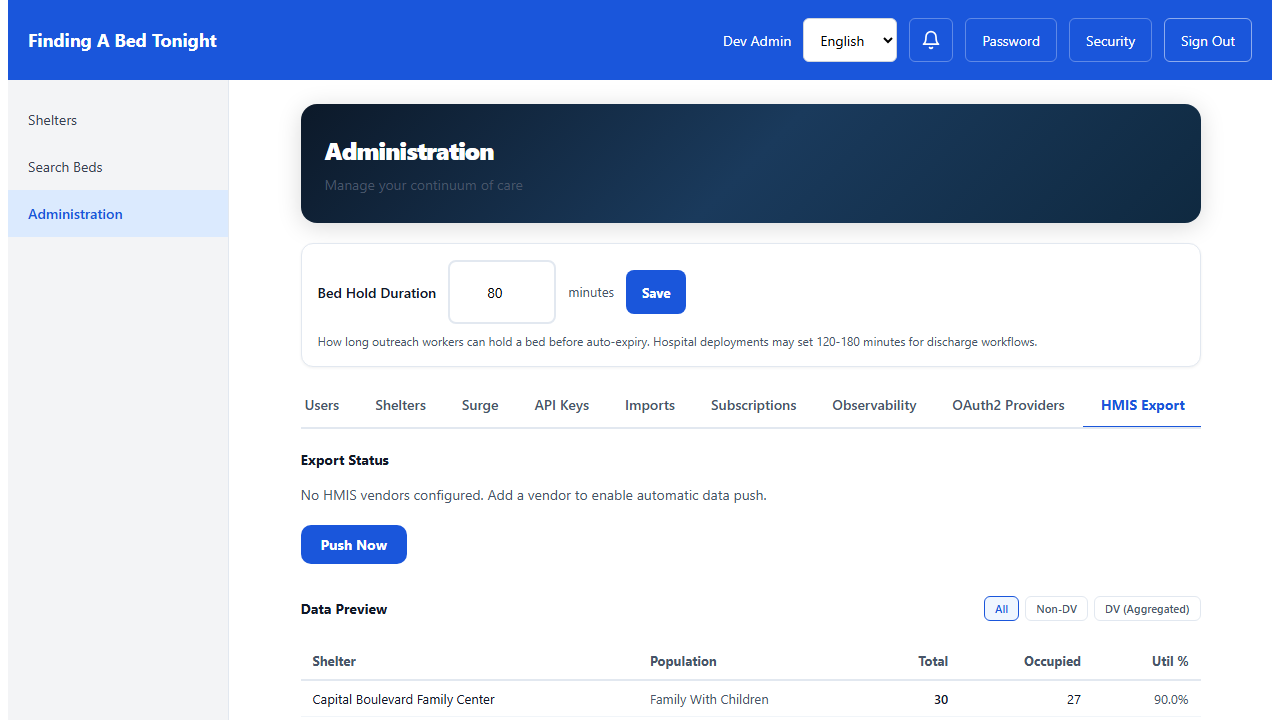
One click pushes bed inventory to Clarity, WellSky, or ClientTrack — whichever HMIS vendor the CoC uses. Failed pushes retry automatically; anything that fails three times lands in a dead letter queue for manual review.
Operational Monitoring (Optional)
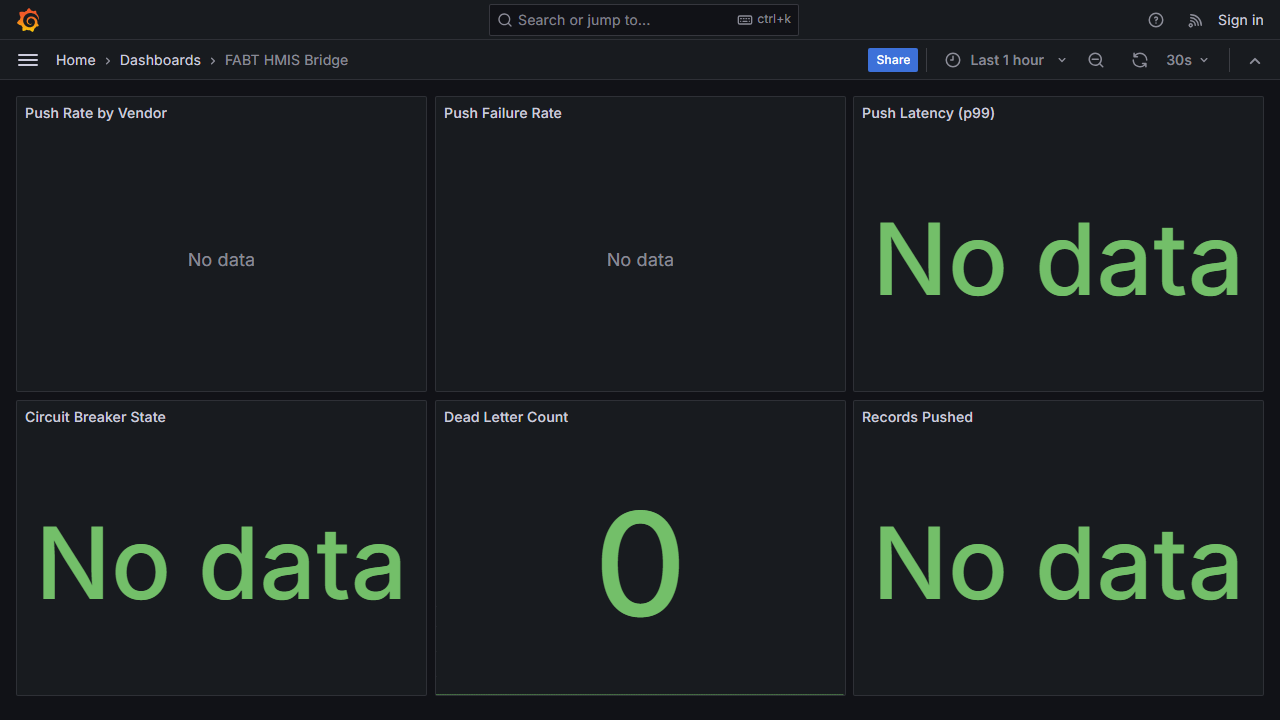
For operations teams who want to know if the push pipeline is healthy — push rate, failure rate, latency, circuit breaker state — all in one Grafana dashboard.
Vendor Adapters
FABT supports multiple HMIS vendors per tenant via a strategy pattern: Bitfocus Clarity (REST API), WellSky (HMIS CSV), and Eccovia ClientTrack (REST API). The outbox pattern is designed so that pushes survive application restarts. Failed pushes retry 3 times, then move to a dead letter queue for manual intervention.